
WHEN COLLEGES CAN CONTACT ATHLETES
When college coaches can first reach out to athletes varies by sport and division. Knowing these key dates can help athletes navigate the recruiting process and be smart about when and how they are reaching out to college coaches.
To see the recruiting calendars for each sport, go to our COLLEGE RECRUITING CALENDARS BY SPORT page.
NCAA DIVISION I
NCAA Division I is the most complex when it comes to when and how college coaches can contact athletes. It varies from sport to sport. For most sports, June 15 after sophomore year is the date when D1 coaches can make personal contacts to athletes.
NON-RECRUITING MATERIALS
Non-recruiting materials typically includes questionnaires (college requests athletic and academic info), camp invites and non-athletic information about their school. Non-recruiting material can be sent to athletes at any time.
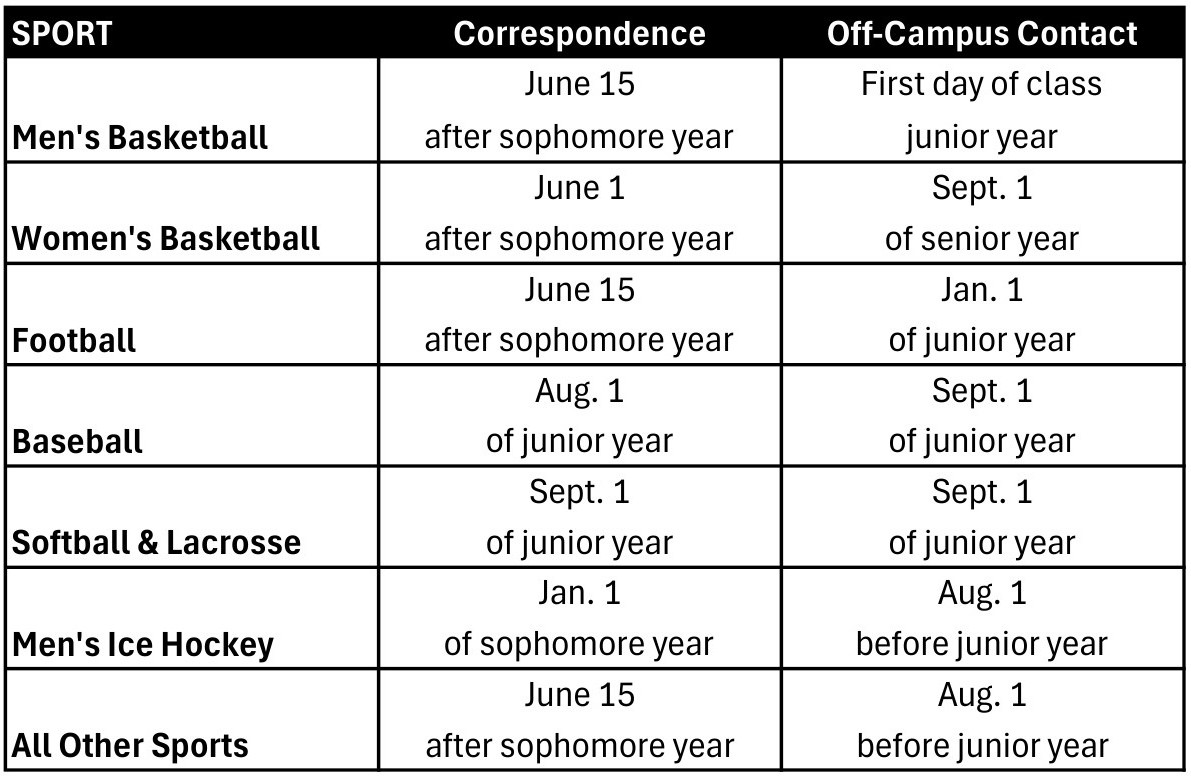
CORRESPONDENCE AND OFF-CAMPUS CONTACT
Correspondence: All institutional staff members may send texts, emails and DMs.
Off-campus contact: When a college coach makes contact with an athlete off the college’s campus.
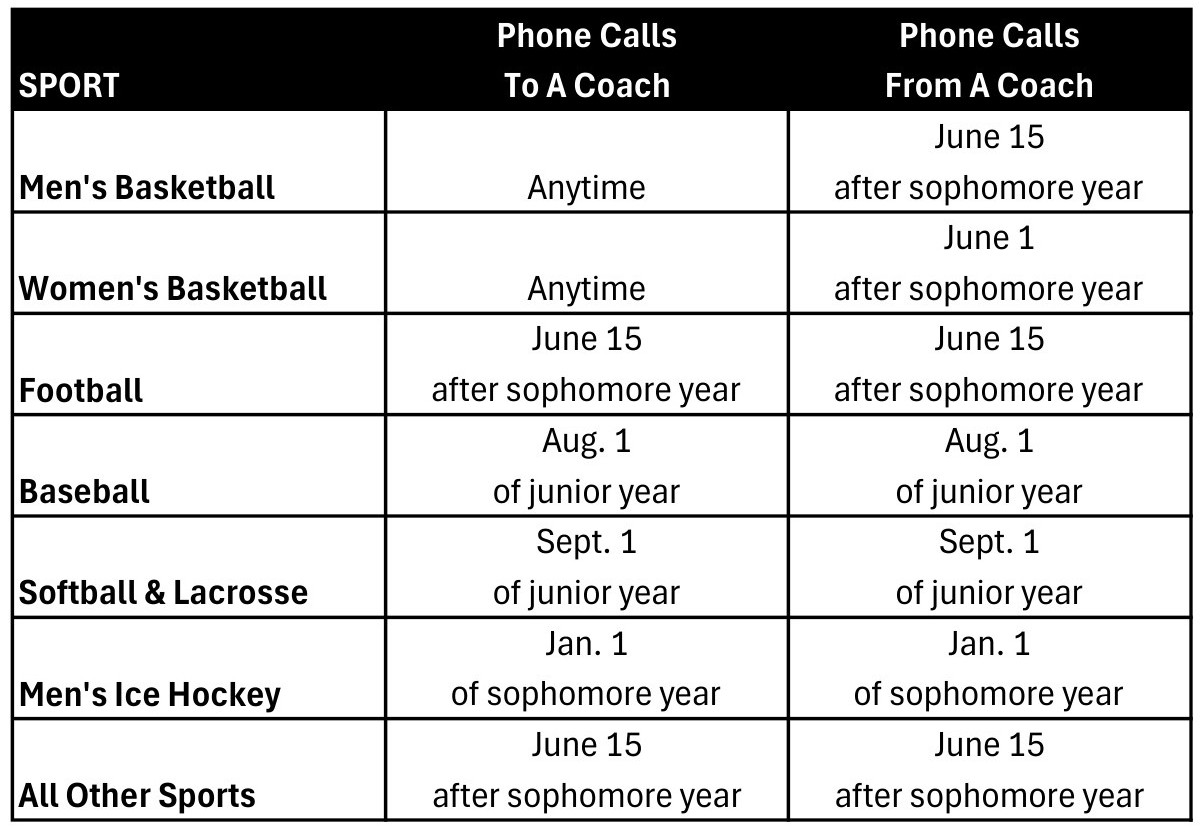
PHONE CALLS
This includes phone calls and online chats, like Zoom.
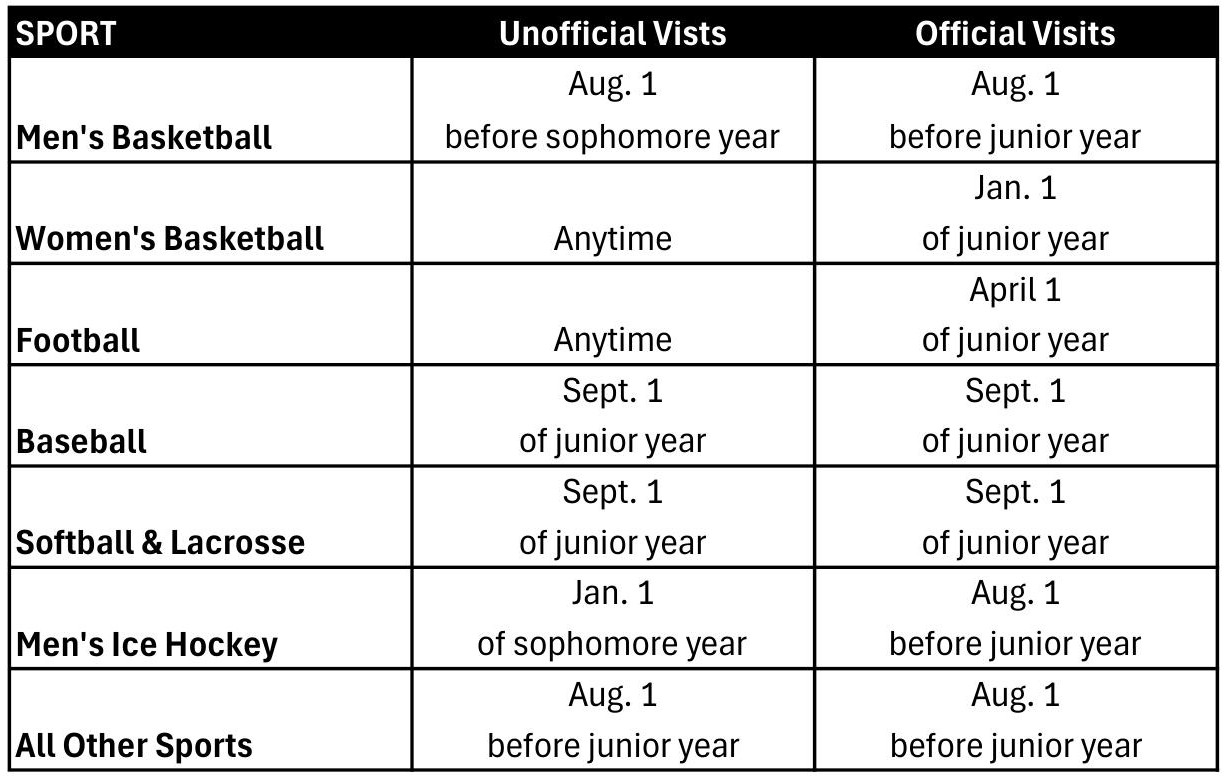
OFFICIAL AND UNOFFICIAL VISITS
Unofficial and official visits: Go to our RECRUITING TERMS TO KNOW page for more details on what these entail.
VERBAL OFFERS
Verbal offers are not an official NCAA rule, except for men’s ice hockey (August 1 of junior year). However, if a college can’t have any recruiting contact with athletes yet, then a verbal offer likely would be a recruiting violation, because the school isn’t supposed to have had recruiting contact with that athlete yet. So, here’s when verbal offers can be made without a possible recruiting violation:
- Football, men’s basketball and women’s basketball: Anytime
- Baseball: Aug. 1 of junior year
- Softball and lacrosse: Sept. 1 of junior year
- Men’s ice hockey: Aug. 1 of junior year
- All other sports: June 15 after sophomore year
See our RECRUITING TERMS TO KNOW page for more details on what verbal offers are and some tips on them.
Expert Advice
The above dates are NOT when college coaches start recruiting athletes. College coaches can watch athletes before these dates and start building their recruiting lists for that class and in some sports, athletes can make phone calls to college coaches at any time. You want to be on college coach’s radars BEFORE these dates, so when these dates come up, the coaches already know about you and start reaching out to you.
NCAA DIVISION II
In Summer 2024, the NCAA changed its rules for Division II coaches for when they could send correspondence (emails, texts, DMs) and make phone calls to athletes. Previously, it was June 15 after sophomore year.
- Non-recruiting materials (typically questionnaires and camp invites): Anytime
- Correspondence (emails, texts, DMs): Anytime
- Phone calls from coaches: Anytime
- Phone calls to coaches: Anytime
- Off-campus contact: June 15 preceding junior year
- Unofficial visit: June 15 preceding junior year
- Official visit: June 15 preceding junior year
- Verbal offers: Anytime
Unofficial and official visits: Go to our RECRUITING TERMS TO KNOW page for more details.
Expert Advice
With NCAA Division II coaches now being able to reach out to athletes earlier than Division I coaches, many coaches are taking advantage of that and contacting and recruiting athletes earlier.
ncaa division iii
NCAA Division III can make personal outreach several different ways at any time.
- Non-recruiting materials (typically questionnaires and camp invites): Anytime
- Correspondence (emails, texts, DMs): Anytime
- Phone calls to and from coaches: Anytime
- Off-campus contact: After sophomore year
- Unofficial visit: January 1 of junior year
- Official visit: January 1 of junior year
- Verbal offers: Anytime
Unofficial and official visits: Go to our RECRUITING TERMS TO KNOW page for more details.
Expert Advice
Even though Division III is the lowest level, athletes shouldn’t wait until their senior year to get recruited by schools at this level (see Recruiting Tips Videos below). D3 schools are recruiting earlier than they did several years ago in part because athletes are more eager to commit to schools sooner when they see their teammates committing to D1 and D2 schools. Athletes who wait to start their recruiting process in their senior year will still have some D3 options, but not as many as if they started the process sooner.
NAIA AND JUCO
NAIA and JUCOs have very little restrictions on when and how they can contact athletes. Go to our NAIA AND JUCO page to see more details.